
One eye donation can give two people the ability to dream!
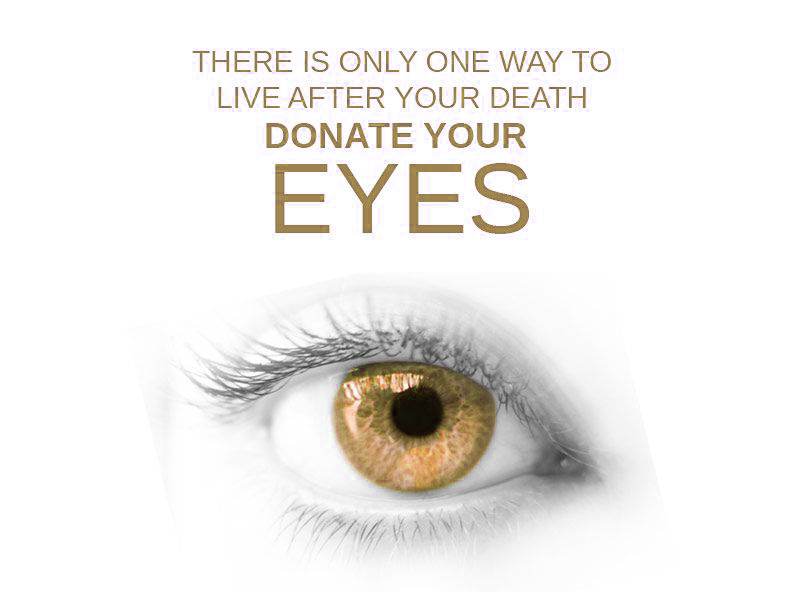
Let others see the world as you did
According to the World Health Organization (WHO), the vast majority of these people live in rural and tier 4 cities, where they do not have access to glasses.
In spite of the significant reduction in the burden of blindness, untreated cataract remains the major challenge for the country. Awareness regarding the common eye diseases and their treatment and utilization of eye care facilities needs to be enhanced for early detection and treatment thereby reducing the load of preventable blindness in our country
According to Avoidable Blindness India, around 88.2% of blindness in India could have been avoided. India Vision Institute (IVI) has proposed a model to various state governments that calls for a routine eye screening for students in grades 3 and 9 to detect refractive error early and prevent blindness. The IVI conducted research with bidi workers, firecracker workers, and gypsy colonies and discovered that blindness could be eradicated for just Rs 50 per person.
Foundation Support Sevices
With your support, we can provide affected individuals and communities support with:
Things to know!
YOUR HELP GIVES HOPE. Please pledge now at I-donate.co.in
24% of the truck drivers in India have a distant vision problem making roadways prone to accidents.

Gartner Report
2.5 lakh eye donations are needed every year, India's eye banks manage to collect only 10% of the required demand.
News(Source)
About Chhillar Healthcare Foundation
My name is Ellora Chhillar. I am currently in the 11th grade and studying in The Shri Ram School, Aravali. Since the number of people awaiting corneal transplantation outnumbers the available donor tissues.
I have started a project for spreading the importance of eye donations. The purpose of our foundation is to create awareness among the masses for the importance of eye donation and act as the main point of contact for those interested in eye pledge registrations through awareness drives, campaigns, local visits, and a cloud-based application.
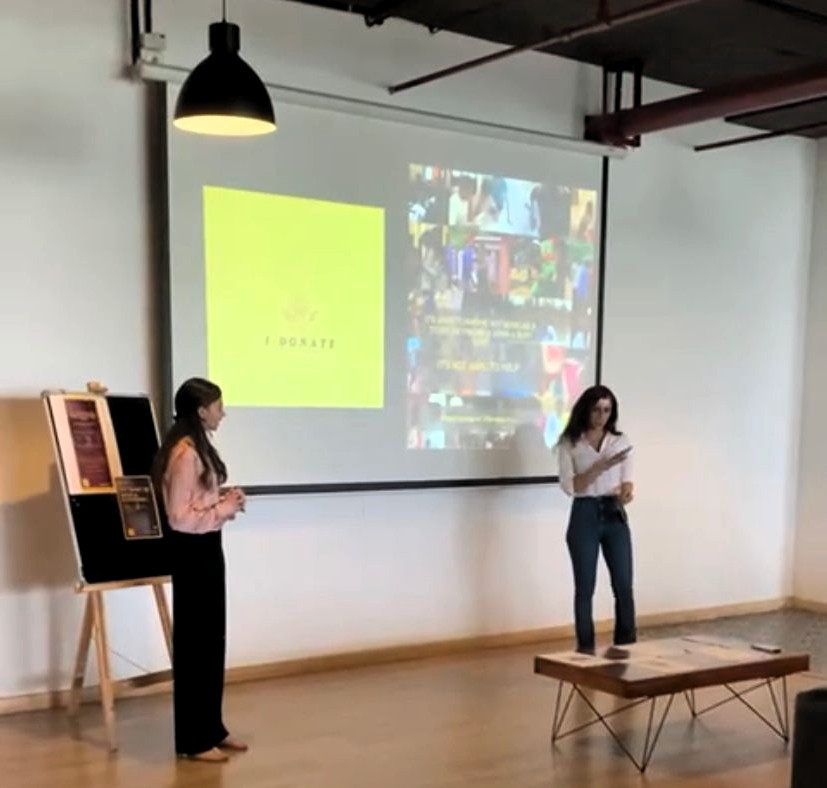
YOUR HELP GIVES HOPE.
Over 15 million individuals in India are blind, making up almost half of the world's 37 million blind people.
Pledge NOW!Frequently Asked Questions
IT'S HARD TO IMAGINE THAT
INDIA IS HOME TO 20% OF THE
WORLD'S VISUALLY IMPAIRED
PEOPLE
IT'S NOT HARD TO HELP.
-
Who can be an eyedonor?
Anyone can be a donor, irrespective of age, sex, bloodgroup or religion. People who use lenses or spectacles for short sightedness, long sightedness or even those whose eyes are operated can still donate their eyes. Poor eyesight does not come in way of eye donation.
-
Does eye donation disfigure the face?
No, It is a myth that eye donation disfigures the face. Removal of thecornea does not cause any disfigurement. After the eyeball has been removed, a transparent eyecap is placed in the eye in place of the eyeball.
-
Will the donor's family pay or receive any fees?
No, It is illegal to buy and sell human eyes, organs and tissues. Any costs associated with eye transplant are borne by the eyebank.
-
Is it necessary to take donor to the hospital?
No, you just need to contact the eye bank team. The team will go to the donors residence or the hospital where the death has occurred and perform the corneal excision.
-
Will others come to know that I have my donated my eyes?
The identities of both donor and recipient are kept confidential. Hence, you need not worry about your identity being revealed.
-
Is it necessary to take donor to the hospital?
No, you just need to contact the eye bank team. The team will go to the donors residence or the hospital where the death has occurred and perform the corneal excision.
-
Please specify the conditions where one cannot donate eyes?
Persons who have systemic infections like AIDS, hepatitis B or C, Rabies, Tetanus, Malaria cannot donate their eyes.
-
I am suffering from Diabetes, Can I still donate my eyes?
Diabetic patients or those who are suffering from hypertension, asthma can also donate their eyes. Anyone with cataract can also donate their eyes. However, a person with communicable diseases cannot donate his/her eyes.
Contact US
Chhillar Healthcare Foundation